Showing posts with label #FraserInstitute. Show all posts

Saturday, 17 October 2020

Media Bias in Canada

 What are we to do when our MEDIA picks favourites? What are we, as a society, to do when journalists are part of the right-wing propaganda machine? 

What are we to do when Canadian journalists repeat conservative talking points as facts, without verification? When they use tentative terms, like "claims" or "alleges" when reporting government statements, and absolutes like "says" and "stated" when reporting CPC statements? 
What are we to do when Canadian Media look to junk "think-tanks" like the Fraser Institute and the Canadian Taxpayer's Federation to paint a picture of reality? What are we to do when our fourth estate has been bought and controlled by those who are not interested in our public good? 
Where are the journalists with integrity? Where are the journalists with professional commitment? Where are the journalists with the guts to fact-check the conservatives? Where are the journalists who are working for the public good? 
Why is even the CBC, our public broadcaster, acting as a CPC cheerleader, even though the new leader promises to put them all out of work? What has happened to journalism in Canada? What can we do about it? 
It's no coincidence that any invading army or dictatorial regime takes control of the media early on. If you control the news - what is reported and how it is reported - you can change the way people see their society. You can create scapegoats. You can justify the unthinkable. 
Many may say I am over-reacting. But this has been going on a long time. Canadians are getting used to hearing the news conservatives want them to hear. Panels of pro-conservative pundits are normalized now. We get more opinion than news, and that's been normalized too. 
1. Is it true?
2. Is it verifiable? (i.e. not the word of an anonymous source)
3. Is publishing it in the interest of the public good?

These are the tests every single piece of news reporting should have to pass.
Think critically when you hear or read the news. Question the way things are worded. Is the reporter conveying trust in what is being said, or incredulity? Is there fact-checking? Are there multiple reputable sources? Is what is being reported important or meant to stir the pot? 
Is the language used in reporting slanted in favour of or against the person or party being reported about? i.e. "Scandal-ridden government" is pejorative. It makes assumptions and leads the reader. Does the reporting seem factual and unbiased? 
Is the reporting full of heuristic cues to evoke positive or negative emotions in the reader/viewer? Adjectives can change the tone of a sentence dramatically, and affect the recipients' perceptions. Be wary of reporting that contains words that celebrate or vilify. 
Does it rely on a single-source so-called "expert" organization, like the Fraser Institute? Does it offer clarity as to the "expert's" qualifications/loyalties/funding? 
Offering "the other side" is a ruse in many cases. There can be one side that is factual and another that is opinion. It is important to differentiate. Offering a contradictory opinion is not only often not useful, it can be harmful. 
If you have a doctor talking about vaccines and an anti-vaxxer contradicting them, that is not good journalism. The other side does not always deserve the airtime because they are just wrong. And the fourth estate is not acting in the public good by giving a podium to just anyone 
We need to be on our guard. Our Canadian media has abandoned us. There are some great reporters out there, but the media infrastructure is controlled by those who do not have the public good at heart. This is a real and present danger to our Canadian way of life. We are not USA north. 

• • •

Thursday, 12 September 2019

Canadian Election Debates - Some History and Clarification

The first televised national leaders' debate was held in 1968. There was one debate, half in English and half in French. They were organised by the primary Canadian news outlets of the time (CTV/CBC), working together. At this time the news was viewed as a "public good". 
Robert Stanfield (PC) and Tommy Douglas (NDP) could not speak French. Real Caouette (Railliement creditiste) could not speak English. Pierre Trudeau (Lib) was fluently bilingual. Some accommodations were made. 
Incidentally, in the federal election of 1962 Lester Pearson (Lib) challenged John Diefenbaker (PC) to a televised debate. Diefenbaker refused. 
Two federal elections went by (1972, 1974) without any televised leaders' debates. In 1979, a debate was held. Organised by CBC/CTV/Global/TVA, all in English. It was moderated by David Johnston, then Dean of the Faculty of Law at Western University, later to be appointed Governot General by Stephen Harper. The questions were posed by a panel of journalists. 
In 1984 there were 3 debates. 1 in French, 1 in English, and a special debate in English on women's issues. 1988 saw 2 debates, one in English and one in French. The same occurred for the 1993, 1997, 2000, and 2004 elections. 
In 2005/06, there were 4 debates, 2 in French and 2 in English. One pair was held in Vancouver and the other pair was held in Quebec, all with the same organisers. The 2008 election returned to the two-debate format. 
2011 also had two debates, one in English and one in French. The date of the French debate had to be moved to avoid conflict with a Montreal Canadiens playoff game. 
In 2015, CPC PM Stephen Harper made the unprecedented move of refusing to participate in the 2 nationally organised television debates. The CPC wanted 5 privately organised debates instead. One was hosted by Macleans magazine, one by the Globe & Mail, 
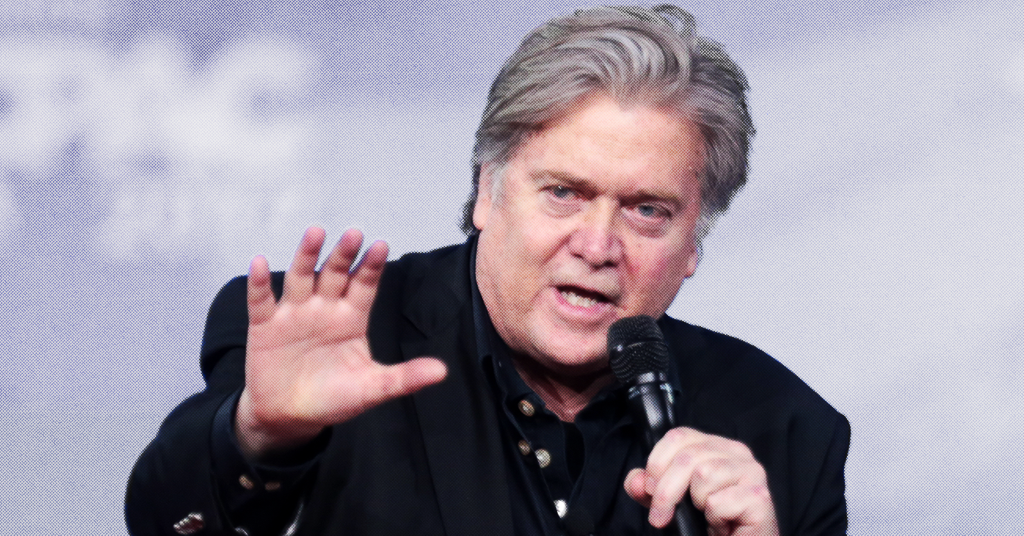
one by the Aurea Foundation and Facebook Canada, one by Quebecor, and Harper finally agreed to the French debate by the media consortium, but not the English one. Aurea, incidentally, funds right-wing think-tanks and gave a platform to Steve Bannon.
This time around, there is a new Leaders' Debates Commission which was formed to reduce bias in the process. The Commission is comprised of David Johnston, a representative from each of the NDP, the CPC, and the Liberal Party, a representative of the CBC, a history professor, a human rights activist, and a representative from the Aboriginal People's Television Network. There are many on the right who feel this makes the commission unfairly biased towards the Liberals, but it's hard to imagine that they would be happy with anything less than a completely right-wing organisation.  This Commission is organising two televised debates, one in English and one in French. As is now the Canadian tradition. 
Macleans/CityTV wants to host a debate (with Paul Wells as moderator) & the Munk Debates wants to host a debate. Both can be seen as quite biased organisers. Paul Wells wrote a glowingly favourable book about Harper. The Munk Debates are administered by the Aurea Foundation, mentioned previously. 
Munk Debates' past speakers include Jordan Peterson, Nigel Farage, Henry Kissinger, Newt Gingrich, along with Bannon. Aurea Foundation supports the Fraser Institute, along with at least 7 other neo-liberal (far-right) think-tanks in Canada. 
The Fraser Institute and the others supported by Aurea have a long-standing role of churning out "reports" that further the Conservative agenda. These are guided by political ideology rather that scientific principles & are usually wildly skewed if not downright inaccurate. 
Yet, in recent years the Canadian media has slavishly reported every questionable report without challenging the findings. This includes the CBC. 
So, you see, both the debates that PM Trudeau has declined to attend are traps, plain and simple. This is not offering Canadians more opportunity to see the leaders in action. This is offering right-wing interests opportunities to tear down the Liberal Prime Minister. 
I believe we Canadians would like to have a leader who can see a trap for what it is and not wander blindly into it. 
There are many ways to skew a debate, as I am sure Ms Raitt is well aware. The moderator can cut off a debater's responses, or allow others to talk over or interrupt. The panel can throw "softball" questions to the favoured debater and "when did you stop beating your wife?" questions to the one they wish to discredit. 
It is telling that CPC MPs are trying to shame the PM into entering into a debate that is stacked against him. It is a bullying tactic. It is not befitting a party that wishes to govern Canada. It is the behaviour of a party that is interested in power, not public good.