Showing posts with label #IDU. Show all posts

Friday, 23 October 2020

James McGill Buchanan: Part Two

 Conservatives like to talk about "corruption". A lot. But do they mean the same thing most people mean by the word? I think many people would consider a political party doing something that does not benefit the people, but rewards their friends as corruption. 

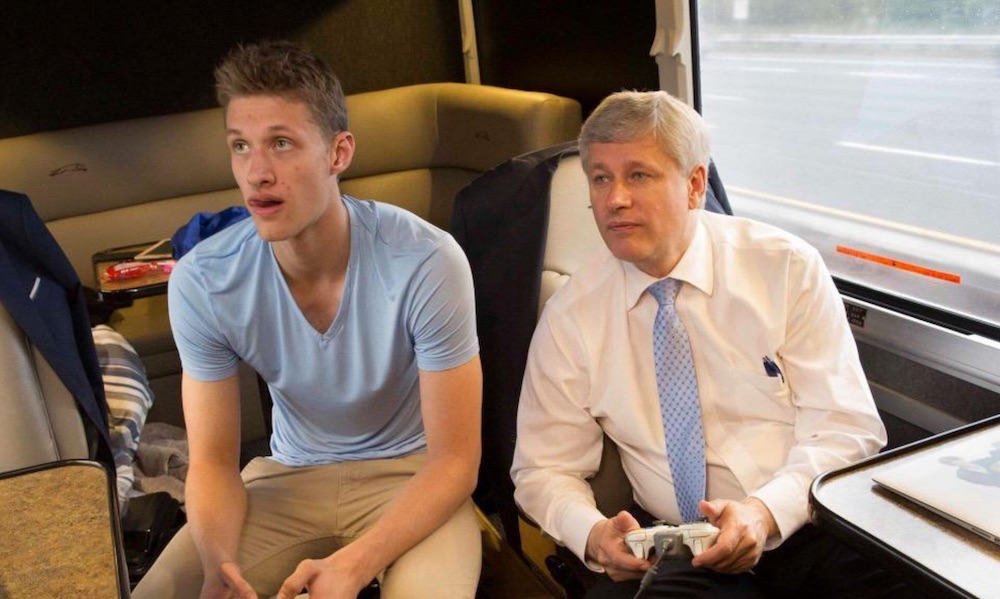
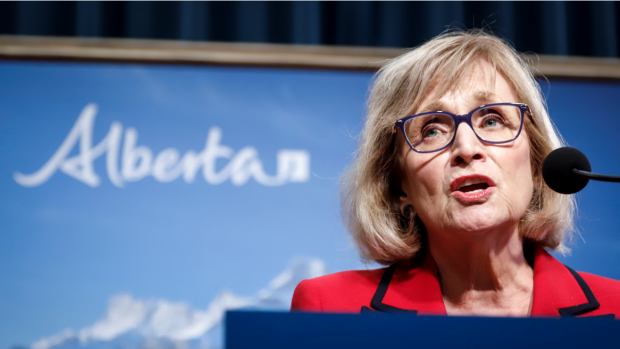
Or a government that invents panels & advisory positions for friends & donors & arranges for these panels and advisors to return reports and recommendations that mirror what the governing party wants to do, but with the guise of "research" and "impartiality". Seems corrupt.
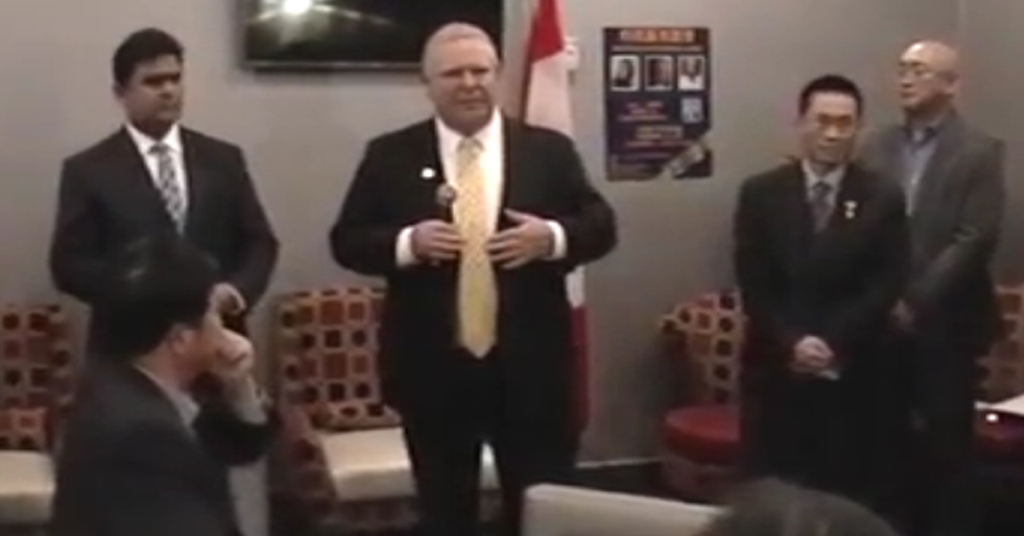
Or, a government that changes electoral boundaries and/or rules to favour their party in the next election. Or makes backroom deals where advantages are offered in exchange for funding PACs and promoting the party. Those seem like corruption.
 
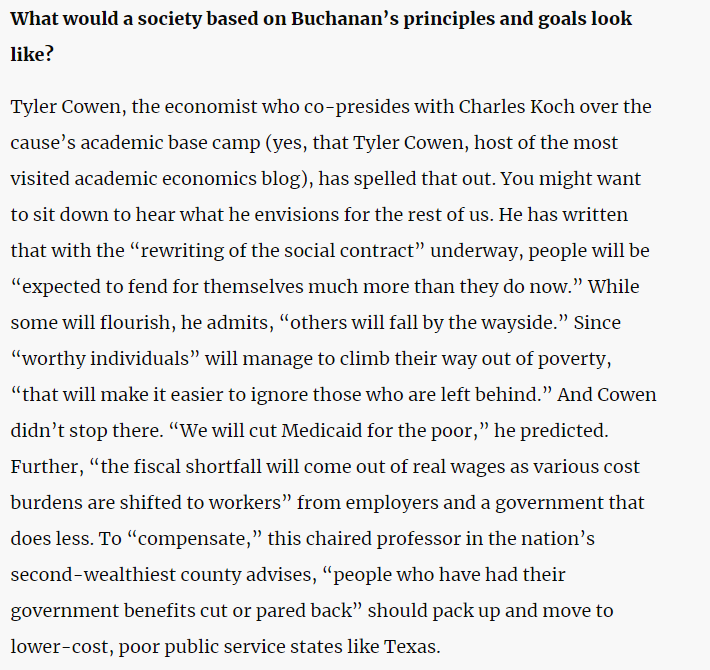
The James McGill Buchanan definition is subtly different. I now present you with a quote from @NancyMacLean5 's book, "Democracy in Chains" which illustrates this point...
 
"Buchanan believed with every fibre of his being that if what a group of people wanted from government could not, on its own merits, win the freely given backing of each individual citizen, including the very wealthiest among us, any attempt by that group to use its numbers to get what it wanted constituted not persuasion of the majority but coercion of the minority, a violation of the liberty of individual taxpayers." 
In other words, he viewed governments who do things the majority (or large groups of citizens) wants, in order to get re-elected, as corrupt, if those things impinged upon the wishes of anyone (particularly the wealthiest).  
So, current Canadian conservatives (who seem to be advocates of the Buchanan school of thought) would feel that, for example, a government raising the minimum wage against the wishes of wealthy business owners, is corrupt. 
Obviously, a government that is run on Buchanan's principles would do nothing in crisis situations, if the wealthy did not like the action. The CPC have strongly indicated that they feel CERB and other pandemic relief is deeply suspect. 
They want to have a committee to examine the "corruption" of the Liberal government in setting up programs to help people. They have signaled that they would have done nothing. Just as Harper did not want to act on stimulus spending during the recession of 2008. 
The Buchanan philosophy gives the wishes of the extremely wealthy preeminence, because he felt their rights were being infringed by any government action that interfered with their ability to be wealthy and continue to amass wealth. 
Remember, from my first instalment about Buchanan, that his theories emerged from a deep resentment of having to treat black citizens in the southern US equally, and the associated costs of that to the wealthy taxpayer. 
Buchanan's philosophy is predicated on the notion that people are not equal. The wealthy are more important and must not be victimized by the not-wealthy, even though the not-wealthy have far greater numbers. 
Most of us understand democracy as a system in which people vote for a candidate from the party they feel will most benefit their community or the country. And the governing party tries to work to the public good, thus pleasing the people, and being re-elected.
In pleasing the people, in a system where number of votes matters more than people's bank accounts, large groups of not-wealthy people have power. Buchanan would say this "pleasing the people" is corruption, because it doesn't protect the interests of the wealthy few.
It is important to understand when conservatives speak these days that their terms of reference may not be the same as most people's. Likewise, their goals may be completely at odds with those of most Canadians.

Stay tuned, there will be more about Buchanan soon! 

James McGill Buchanan: Part One

 In 1955, the US Supreme Court issued its second Brown v. Board of Education ruling. They called for dismantling of segregation in public schools, across the US, "with all deliberate speed". 

Now, some people in Virginia, including the president of the University of Virginia, Colgate Whitehead Darden Jr, were appalled by this. They felt it seriously over-reached into "states' rights". 
Any state, they felt, should be able to discriminate against any people they felt were inferior, because of race, religion, gender, or whatever damn thing they chose. They saw it as a deliberate attack on the cherished values and way of life of southern Americans. 
Well, white southern Americans, anyway. And, really, from their point of view, those were the only southerners that mattered. Darden had a young economist on faculty, James McGill Buchanan. Buchanan had written a proposal that touched Darden deeply. 
It was as if they thought with one mind. Buchanan saw the ruling as not just an attack on the State's right to discriminate, but he also foresaw how giving these people more rights would inevitably lead to actual depletions of the bank accounts of people like himself. 
He realised that those with resources would be called upon to subsidize the creation of equality. He imagined his taxes going up to accommodate all these people who had, hitherto been treated as inferior. And he did not like that. 
His proposal to Darden was that if Darden could find the resources to create a centre at the university for Buchanan, he (Buchanan) would create a new school of political economy and social philosophy to counter these incursions into the traditional southern way of life. 
Darden was excited by this, and found the money for Buchanan's centre. However, despite working very hard, Buchanan and his staff were unable to stem the tide of civil rights and progressive thought through the 60s and 70s. 
But, sometime in the 80s or early 90s, Charles Koch discovered Buchanan and his work and began to pour money into Buchanan's Centre for Study of Public Choice. And things began to happen... 
Buchanan had an idea, stemming from that Supreme Court ruling, that would change how the right would conduct politics. His core idea: that people should not be allowed to use their numbers to force legislation favouring their position. 
That no person of property should be made to give up any of their property, through taxation or otherwise, nor should business profit be thwarted, simply because a large number of people wanted certain things to happen. Think about that for a moment. 
Buchanan's core premise is the antithesis of democracy. He believed that law-makers should not heed the will of the people, but, rather, should protect the most wealthy. Ostensibly from the will of the people. Obviously, Buchanan felt that labour unions were terrible... 
Unions picked employers' pockets based on the sheer number of workers relative to the number of employers. He was opposed to the will of the many impinging in any way on the will of the 1%. 
This is a very brief introduction to James McGill Buchanan. It is largely drawn from the book, Democracy in Chains, by Nancy MacLean (@NancyMacLean5) . I encourage you to get a copy and read it. 
What has this got to do with Canadian politics? Well, look around. What you see happening in Alberta, Ontario, Saskatchewan, Manitoba, and being proposed by the federal CPC, is all based on Buchanan's ideology. 
Just like in the US, think-tanks in Canada (Fraser Institute and others) are busy churning out propaganda to support this ideology. Our American-owned media is controlling the way news is reported to subtly sway Canadians to favour a corporatocracy. 
It's all around us. Before you flame me, think. Think about how closely Canadian conservative parties mirror what the Republicans are doing in the US. Think about what might underlie their actions. No, it is not because they are stupid or incompetent. A lot of people think that. 
But that is not the case. They are bad for Canadians because they are not serving Canadians. They aren't bungling. They are doing their jobs. It's just that their jobs are not what we think they are. Think about it. 
That's it for the first instalment. I will give everyone some time to process this information. There will be more. Much more. Stay tuned! 

Saturday, 17 October 2020

Early Provincial Elections.... What are the Conservatives up to?

 So, Ontario is going to go to the polls early. Following New Brunswick's lead. Will Manitoba and PEI and Alberta follow? Saskatchewan has an election coming in November... 

What would move premiers to call an election, several years ahead of schedule, during a pandemic? Ford has until 2022. So does Legault. Kenney and Pallister both have until 2023. It seems unlikely Kenney will call an election. Albertans aren't as sweet on him any more 
Higgs had until 2022, but he called it early. What, indeed, would move these conservative premiers to call an election with years left on their mandates? During a pandemic, no less?  
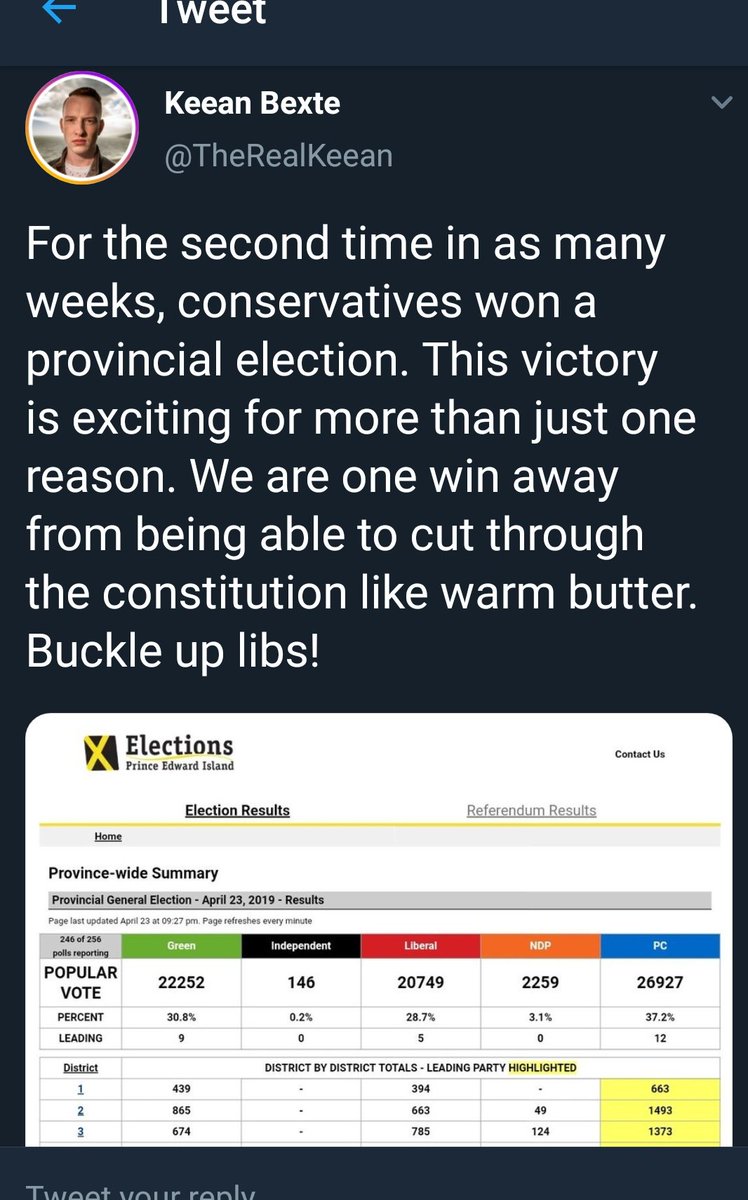
I'm sure there are a lot of possible reasons. But, could it be that they don't know when the next federal election might be? It could be as far off as 2023.  
Look up the magic formula for re-opening the constitution and tinkering with it, and our charter of rights and freedoms. You will find there must be agreement from 2/3 of the provinces, representing > 50% of the population, plus the feds, plus the senate.  
Could it be that the conservatives really believe that they will win the next federal election? Could conservative premiers be doing the advance work of shoring up their mandates to make sure those 7 provinces are online and ready? 
"Why would they even want to do that?" you may ask. Well, because gutting the constitution and the charter is sort of the raison d'etre of the Reform Party, aka the Conservative Party of Canada. What did you think they wanted to reform? 
Harper hates the charter and the constitution. He hates it for several reasons.
1) A Trudeau created it,
2) It gives people of whom he does not approve equal rights to "Old Stock Canadians"
3) Constitutional challenges overturned almost all his nasty legislation.

"What does Harper have to do with any of this?" you may ask. Well, the CPC is his party. He created it. He molded the minds of his caucus, many of whom are still in their seats to this day. He surrounded himself with sycophants, none of whom could challenge his leadership. 
In his mind, he was supposed to be PM forever. Pesky Canadians toppled his dreams in 2015. But he hasn't gone away. He's employed as advisor to the governments of Alberta & Saskachewan, & he seems to be still running the CPC from behind the scenes. 
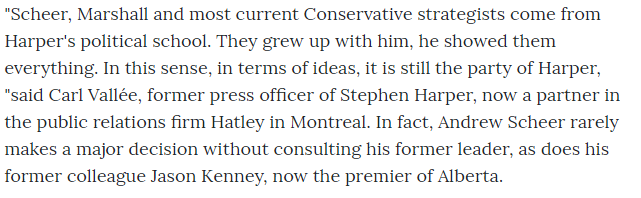
We can see his fingerprints all over what Jason Kenney is doing to Alberta. We could almost see his hand up Andrew Scheer's back. O'Toole seems to be another ventriquial figure. L'Actualite published this in an article awhile ago: 
You see, he did no succession planning because he never meant to stop being leader. So the party has no one with the skill-set to really run it without deferring to The Boss. 
And, just like a passionate entrepreneur, he is not ready, will probably never be ready, to turn over his creation entirely to anyone else. Certainly not before he sees his vision of Canada realised. 
What is his vision for Canada? Look south. Private health care, private education, gun proliferation, small government (very limited social programs), draconian laws, closed borders except to "acceptable" people, bans on abortion, same-sex marriage, and MAID... 
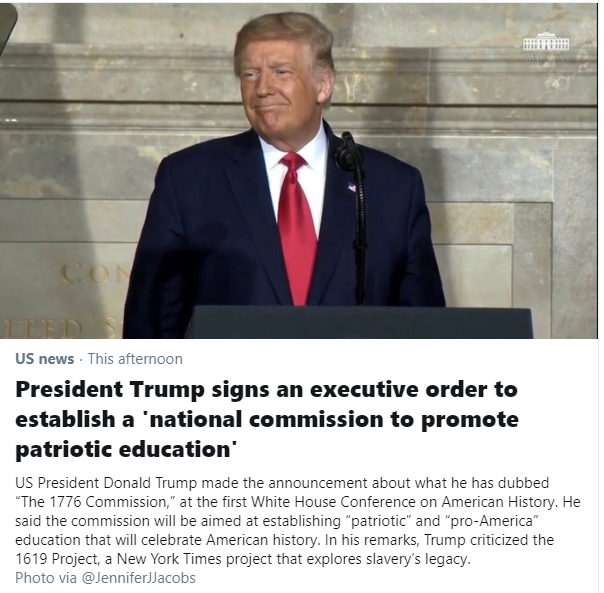
Oh, and probably something like what Trump just did, to ensure kids are raised knowing nothing but "Conservatives are the only conceivable government" 
As head of the IDU, Harper has spent the past 5 years helping right-wing regimes gain power around the world. And there is a plan. Not a conspiracy theory, a carefully developed plan.  
If all restrictions were lifted from business, the hard-working would be rightly rewarded & those who failed or were unable to take responsibility for themselves would be punished. Survival of the fittest. Which is odd coming from a cohort which identifies with religion  
Nevertheless, this is the underlying motivation for the CPC, demonstrated through: cutting environmental protections (deprotecting lakes and waterways, ELA, etc), cutting health and safety regulations (Walkerton, Lac Megantic, Listeriosis), muzzling scientists, etc. 
All part of throwing the doors open wide for the brave new world of corporatocracy. You know, letting the invisible hand of the market sweep away all the undesirable elements: the lazy, the ill, the aged, the addicted, etc. 
The Koch brothers embraced Buchanan's vision & philosophy & it has been an integral part of their empire-building around the globe. It can be seen now, nearing full manifestation in our neighbour to the south. Remember, for many years now Koch Inc has been in Canada too. 
Sound like tin-foil hat stuff to you? It isn't. What is going on in our media right now is not normal. The way the conservatives are behaving is not normal, not compared with pre-2003 conservative parties. The way the NDP is behaving is way not normal. 
The game has changed and no one told us. And that is the point. Incremental shifting of things to a new normal where we aren't supposed to care about the less fortunate. Where life becomes so precarious that we can't spare the energy to look out for each other. 
Then they've won. 
Because together we have power. They don't want us to stand together. They want us all scrambling to look after ourselves, and screw everyone else. We can't let that happen to us. Watch what the premiers do. Let's keep the magic formula out of their hands.